Showing posts with label steam. Show all posts

Tuesday, March 20, 2018

Creating a Culture of Belonging for the Tech Loving Student


In the last few years our school has really stepped up our STEM/STEAM game. In this midst of creating opportunities for robotics, circuitry, design thinking competitions and coding, something unique has happened that we weren't expecting...we have empowered a new demographic at our school. Do you remember the iconic 1985 movie The Breakfast Club? Even in the trailer the BRAIN was left out of the introduction. There is always a place for the BEAUTY, JOCK, REBEL, and even the RECLUSE to find their way but it's sometimes not easy for the BRAINS to find their connection in our schools.

What we have found is that technology often is a pull for those personality types. If you remember Anthony Michael Hall's role in the movie, he wanted friendships and a sense of belonging. A day in Saturday school was a highlight for him because he felt he had friends. He found his sense of belonging that morning.

When I look at the demographics of our robotics teams and our lower school electives, I often see students that are on the autism spectrum choosing to also be a part of these programs. Don't hear me paint with a wide brush of generalization here- not all students in these programs are on the spectrum but it does seem to be a niche for many of our students that are there and it's nice that they have a sense of real community.

Last year, when I started my lower school student led tech support team, I noticed that many of the young gentlemen that chose to be a part really didn't have a "fit" elsewhere in our school- they weren't necessarily into athletics or the arts, they were the ones that quickly picked up on how to do things using instructional technology in the classroom and often became my help when teaching a new concept. By empowering these students, by allowing them to earn their "tech support staff" certification, I created a sense of importance for them. Understanding technology came easy for them and by recognizing that in them, we kind of "unleashed the beast!"

All of a sudden these same students were becoming innovators and creators using technology at home. They were joining the robotics team and getting plugged in. By creating this niche in our school we have created a sense of belonging for a new set of students that previously did not have a group to call their own. I am seeing this happen at all levels of our preK-12 school.

It is a standing tradition when an athletic team makes it to state playoffs they get a send-off in our upper school. The entire school fills the hallways and clap and cheer for these athletes as they leave the school to load the buses. But this year, something awesome happened. Our high school robotics team went to the state competition and had the same experience! It was the most beautiful thing I have seen all year as these kids received recognition for their hard work just like the "jocks" did. I believe we are each created with gifts and talents that make us uniquely who we are and image bearers of God. I am thankful that these students have the opportunity to use their gifts and talents for something that inspires them. I am also thankful to work in an area that gives opportunity to empower all students.


Sunday, March 18, 2018

Year Two - Elementary Tech Team Plan

Our elementary school creates an opportunity for our fourth and fifth-grade students to take part in Friday afternoon electives where they choose from about 7- 8 choices that teachers lead from their passions. The opportunities have been awesome- woodworking, knitting, makerspace, board games, digital gaming, are just a few. For me, it finally gave me the opportunity to create an elementary tech support team.  Last year our students researched and created step-by-step instructional supports for our teachers regarding the technology they use on a regular basis. The opportunity was awesome and the details of what we did and accomplished can be found here in this post: https://techhelpful.blogspot.com/2016/11/the-beauty-of-ownership-and-belonging.html

This year we are going a different direction. The students will once again create "how to" instructional supports that might be a Google doc or a video but we are making it a bit more fun. Recently, I asked our elementary teachers what they needed the most in terms of technology professional development. The answer was, "we want to have a better understanding of our STEAM tools."

Two weeks ago I had the opportunity to attend a workshop sponsored by Mozilla that allowed the attendees to create an escape room experience that would allow the users to learn more about iOT (internet of things) as they went through the experience. I loved the idea! So I challenged my 7 students in this quarter's tech team to think on this. We will have 10 weeks of 45 minutes on Friday to create our experience. Here is what we defined and how we are going to accomplish it:

Day 1:

  • I gave the students 3 sticky notes each and had students write down 3 STEAM tools they felt they could teach their teachers more about. We then sorted these ideas and came up with a list to work from. 
  • We then used the sticky note idea to write down 3 themes for our rooms. Each student wrote down their ideas and we sorted those. Based on which idea had the most votes, we went with an "ocean" theme.
  • Our next step was to assign groups and have each student start thinking about what their experience will look like with the STEAM tool they were assigned. For instance, they want to dress their Dash and Dot robots up like "pirmaids" (pirate mermaids) and have them go on a treasure hunt. 
Day 2: 

Our new STEAM Project Assistant and Curriculum coordinator will meet with our students and they will teach her skills because she is new to the job. Based on the questions she asks and the things they think she should know, they will start creating a list of basic skills needed for their tool. I'm actually out of town for this week so I created this video to help the students know what they would do for this week: 


Day 3:
Students will start creating their lesson plan for their escape room experience based on their ideas from day 1 and their notes from Day 2.

Day 4: Students will create green screen video productions of "how to" use the tech tools. These videos will be viewed by the teachers before they start their escape room experience for each tool. 

Day 5: We will upload all videos to last year's tech team website so that there is one place teachers can go for support. 

Day 6: We will continue to create a good escape room experience. Our goal is to offer it for each grade level to work together. 

Day 7: Students will create the experience and try each other's stations out and give feedback.

Day 8: Students will take the feedback from the previous week and finish up their end product.

Day 9: Students will use the time to decorate the room and offer the 30-minute professional development opportunity to any available teachers, admin, and parents.

Day 10: Students will once again use the time to decorate the room and offer the 30-minute professional development opportunity to any available teachers, admin, and parents.


Full STEAM Ahead at CCS


In the spring of 2016 our school was approached by a parent that wanted more STEAM opportunities for his daughters to take place at our school. Oftentimes people think that funding comes easy for private schools but I submit that it does not for individualized curricular projects. The grants aren't available to us and that was where I was as the Technology Coordinator in our lower school. Until this parent shared not only his vision but created funding opportunities, I just dreamed about integrating coding, robotics, circuitry, etc into our curriculum- the funding just wasn't there.

The change happened with the 2016-2017 school year and we were able to create a STEAM (Science, Technology, Engineering, Arts, Math) curriculum into our school that supported our integrated units. We were also able to hire a full time STEAM Project Assistant that would learn the nitty gritty of coding, robotics, circuitry, and the design thinking process. This STEAM Project Assistant meets with grade level teachers and works with them to create opportunities for integrated projected based learning as well as stand alone STEAM lesson plans that support weekly learning. The beauty of the way we have done this is that this STEAM Project Assistant creates embedded professional development opportunities for our teachers as well. They are able to learn about coding hand-in-hand with their students. Our goal with our STEAM program is to give our students a variety of experiences to broaden their understanding of potential STEAM jobs for their futures. We have adopted the concept of these lesson plans to not be associated with a "grade." This is our attempt to create a culture that makes students lead with curiosity and not fear failing. Our project based learning opportunities are graded by the teachers but any weekly STEAM lessons that do not impact the PBLs are considered scaffolding for learning.

This change opened the door for our students to have a variety of new experiences and for some of our students there was an immediate "click." We were already a tech-rich lower school with rolling carts of iPads and chrome books in grades preK-4th and a 1:1 environment for our fifth graders but the STEAM program created more opportunities to use the technology beyond the 4 C's of technology integration- curation, consumption, creation, and connection in ways we had not had the ability to do before.
We are programming robots and concepts, making green screen productions and showing our elementary students how to make websites. We were taking our possibilities to a new level like never before. For some of our students, we peaked an interest...we were empowering the "brains."

Wednesday, March 14, 2018

School Designation: Process > End Results


In September of this school year I became aware that the state of Tennessee had a STEM School Designation Process. Being a little over a year into implementing a STEAM curriculum at Chattanooga Christian Lower School, I decided to look at the criteria to discern what my state felt was "best practice" in regards to STEM education. There are 18 sub areas under the headings of Infastructure, Curriculum and Instruction, Professional Development, Achievement, and Community and Post Secondary Partnerships that are critiqued.

As I looked over what was deemed "best practice," I was fairly excited to learn that we were either hitting all of them hard or were in a process of doing so. I met with our STEAM leadership team and we decided to go ahead and apply for the designation based on our self- evaluation. Two weeks ago I received the news that the committee felt we needed to make some growth in 4 of those 18 sub areas. Honestly, I believe that much of the issue is less that we need to make growth and more that I did not do a great job at documentation in those areas. That being said, our STEAM leadership team has already looked at the feedback and we have made a plan to move forward for next year. The hard part is behind us, it's now just being intentional about updating our sub area folders as needed.

That being said, I was more than a little disappointed that we did not receive the designation this year. We had some unexpected circumstances during the time that the Designation Review Team needed more documentation. I wasn't able to give them the information needed but I also know that we did need to do some improvement in the amount of PD opportunities we give our teachers in regards to STEAM. So here is where I am at...

The process of gathering information for the state of Tennessee for the STEM Designated School process has grown our program more than any assigned "you made it!" stamp could ever do. Being mindful about what is being requested and questioning the WHY of what is deemed important has helped me to add more robustness in areas that we currently might have been lacking in.

This process also has opened the door for me to say "This is best practice, we have to give the teachers the scaffolding they need in STEAM if we expect implementation to go well." It gives me documentation to stand on but furthermore it gives me preset goals that are aligned with what the world (or at least my state) thinks is "best practice." For me, it is never going to look just like what the state desires because we are a private Christian School that wants to definitely strive to holistically teach our students...humanities are just as important to us for a well rounded student BUT if we are doing the things deemed best practice in STEM why not share that?

One of our teachers asked, "Why do we want to be a STEM Designated School?" The answer for me is easy, it gives us solid framework that the outside world is already familiar with and that studies show parents want for their students. But as a leader of the STEAM program, it gives me solid goals in the form of a rubric that can help our school navigate the growth of this program. I don't have to spend my time defining what best practice is, I can spend my time creating opportunities for best practice to happen. Watch out next year, Tennessee...we got this.

Tuesday, February 20, 2018

"And what about technology?"- The progression of an instructional technologist


I've hinted at this moment in another recent blog post but I just want to share what progression in technology integration looks like for me. A few years back I was holding teachers accountable for 2 technology enhanced projects a year in our lower school. Today, there is no checkbox accountability for usage because it has just seamlessly become part of who we are at Chattanooga Christian Lower School.

In the beginning it would be fair to say that there were times when I was leading conversations towards tech integration. I know some people might disagree with me but I do believe in the beginning that often has to happen in order to open mindsets. I co-taught with teachers as they introduced technology in their classrooms. I was the safety net for those that were uncomfortable.

Today, it has just become part of instructional consideration for our teachers. Is there an app I can use that supports math instruction? Is there a way I can digitally have students share their learning? Our lower school teachers have adapted and adopted technology in ways that intentionally support their classroom learning without me directing. Now, I often come up with suggestions on how technology can support certain ideas or I share some new tool that I think would bring value to the classrooms but I'm not standing around watching to make sure integration is happening- it is.

I'll be honest, I didn't realize when the shift happened. I tend to share my Tech Tip Tuesday ideas just to give teachers some fresh resources. I will always be seen as the techie but I also have been a part in helping our teachers understand project based learning and how STEAM education can support this learning. Which leads me to the following moment that felt like fireworks of success went off-

It was the first few inservice days back in school for our teachers in January and the lower school curriculum coordinator and myself were visiting each grade level to help the groups with their project based learning plans. We were sharing concepts, answering questions, giving ideas, etc. Half the day had gone by when a teacher looked at me and said, "and I guess you expect a technology component to these?" It was as if the world around me got quiet. It dawned on me that I had not mentioned technology all morning long as we were talking professional development and I was the technology coordinator! My answer was this quirky, less than confident sentence..."well, you guys are doing tech integration really well now and uh I would think that if you felt it would enhance this PBL you would use it, right?"

I remember walking out questioning myself. What was I doing? Was I truly doing my job if I wasn't expecting technology integration? And then it hit me...this is what it SHOULD look like. I'm not saying we have arrived. There will always be areas that need growth (for myself and for our school) but this moment has left me with a small sense of accomplishment. I won't linger here, I'll keep pushing forward in other areas, looking for ways to be innovative. BUT it's nice to know I've grown.

Thursday, January 4, 2018

Authentic Embedded Professional Development? It's possible.


Professional development- Before you start throwing me shade and rolling your eyes and immediately go into "it's a waste of my planning time" hear me out. There are other ways to do it. Lately, I realized that not all of our teachers are familiar with the design thinking process. Inservice days are few and far between and teachers often need those days to prepare for the new semester. At our school we basically have them at the beginning of the school year, beginning of second semester, and at the end of the school year. All these times are terribly busy for educators. I'll be honest, I actually asked if I could use a 1/2 day in January for a Design Thinking Professional Development leader to come in and share with our teachers. Thankfully, our Lower School head of schools and our curriculum coordinator wanted to protect that time so the teachers could work in their classroom. I say thankfully because it caused me to have to become creative with how to do this.

So, we are starting a 5 week all school design thinking challenge. Each week the teachers will work through one of the 5 steps of design thinking  (this is a great link put together by one of our STEAM Business Partner's Bridge Innovate) with their students. I will send an email out to the teachers to explain the step and they will take their students to the following display on a prominent wall in the school and work on that week's step:


 I can't wait to get this design thinking opportunity underway. I hope that it proves to be beneficial to our students, teachers and possibly even our entire school as we reimagine our school and how to improve it! This challenge will create opportunities for our teachers to hit the ISTE Standards for Educators that include: Learner, Designer, and Facilitator. It will allow the students to tap into the ISTE Standards for Students that include: Global Collaborator and Innovative Designer. This challenge will also support the goals and professional development needed for our STEAM program to continue to grow forward. Stay tuned for more details. Below is an example of the email I sent out today to our teachers to explain the process and the WHY. I am striving this year to always start with the WHY.

Teachers,
Have you seen the "Designing CCS" display by the front office wall? So first of all we all owe a BIG thank you to Shonda and Myra for protecting our time to work so much in the classroom for the last two days. I know it is always helpful to start back with time to plan. That being said, Shonda and Myra didn't want to burden you with professional development learning during that time. We do desire for our school to have an understanding of the design thinking process that Jessica Yandell is utilizing during STEAM though. So what better way to learn about it than have an "all school" Design Thinking Challenge? 

Starting on Monday we are asking you to stop by the display sometime during the week with your class and come up with one area that relates to the CHALLENGE phase. Once your class comes to an agreement on what area you would like to see improvement, add your sticky note observation to the white page. It's ok if different classes pick the same thing. It's also ok to dream big. So your job is for your class to choose one photo and make observations about how to improve CCS. On your sticky note finish the following statement:
We can improve the CCS community by...

Each week we will go on to the next step and I will send an email out to you so you can see what the expectations are for that week. So while this is a learning process for your students, it is also a professional development opportunity for you. Win/win. 

Thank you for all you do to support STEAM at CCS and for the way you accept both Jessica and myself in this endeavor. Let's design CCS!

Monday, December 18, 2017

Connecting School Learning with Local Businesses...even for elementary students.

I'm thankful for Chattanooga and how it supports education in the Tennessee Valley. I'm thankful for local businesses that support the learning happening at Chattanooga Christian School. Recently we have been blessed by support from Bridge Innovate to allow our students to participate in a design thinking challenge. This is the second year that we have had a team to participate in this wonderful opportunity. This year the theme is "Transportation of the Future."

We have 6 fifth grade students that are participating in the challenge. These 6 students are using the design thinking process to dream about the future of transportation in the Chattanooga area. They have brainstormed and were broken up in groups to look at rural, urban, and waterway transportation. They have looked at feasibility at what seems like outlandish transportation of the future. They have thought about transportation from the viewpoint of the users.

As part of the design thinking process it is always good to get feedback on your idea. That's where our partnership with Chattanooga Area Regional Transportation Authority (CARTA) came into play. CCS dad, Brent Matthews, is the Director of Parking and Security for CARTA. He graciously volunteered to speak with our students and answer some questions they had about transportation in Chattanooga. After a bit of planning, Brent and I soon realized that taking a field trip to the CARTA Shuttle Park South location would be very beneficial for our students. Cue last Friday! We loaded up on a CCS bus and we went to visit not just Mr. Matthews but also CARTA Executive Director, Lisa Maragnano. The students were wowed by the board room, the huge Chattanooga image on the wall, and the swag that Mr. Matthews shared with them. 
Our students had created questions in a Google Doc and this had been shared with Mr. Matthews and Mrs. Maragnano before our visit. Mr. Matthews immediately called the meeting to order and answered the questions on the document for the students. He then gave the students time to ask more questions and share their concept ideas. They were using their brand new mini notebooks given to them by Mr. Matthews to take notes during the meeting. We ended with a brief trip upstairs in the parking garage to see one of the 20 electric cars that Chattanooga has available as part of the Green Commuter Car Sharing program.

I won't share the secrets and plans for moving forward but I am thankful for CARTA and their willingness to invest in the lower school students at Chattanooga Christian School. Team work makes the dream work. The open attitude of area businesses coming alongside our students to give them opportunities to see real world STEAM jobs is a huge positive investment in the future. Anyone that knows me knows that I am passionate about our students having STEAM opportunities in an authentic setting. Chattanooga's innovative community makes it easy for educators to tap into ways for this to happen. 


If you look at the ISTE Standards for Students or the Essential Points of the Tennessee STEM Designated School program you will see that this type of opportunity isn't just seen as a perk but as essential to next generation education. With the connectedness of today's world, it's easier than ever before to get students figuratively and literally outside of their school box. Looking for opportunities to make that happen becomes the job of the educator. Becoming a well connected educator opens the door for you to be proactive in this. 

I will leave you with this, these 6 students spent approximately 45 minutes off campus in a boardroom asking questions, there was nothing magical about this trip but the sense of excitement on the way over and the sense of accomplishment on the way back was amazing. I will continue to look for more ways to give my students more amazing. 

Tuesday, November 14, 2017

Christmas Tech Toy List


 It is the time of year where children are targeted by every toy commercial that comes on. Children start adding toy after toy to their list only because they are being bombarded with messages against your will. But fear not, there are so many choices that parents and grandparents can make that are considered a TOY as well as EDUCATIONAL. Below is a list of potential gifts from my realm of education - STEAM (science, technology, engineering, arts, and math). Toys can be fun and educational at the same time. 

Ozobots - Yes! Teach your child how to code a robot. Ozobots are a cost effective way to introduce coding to the physical world. While you don't have to have a device with BIT to make them work having an android or iOS device to download the app takes your opportunities with EVO to the next level. Check out Ozobots for children of any age! 


Dash and Dot - Wonder Workshop makes robotics durable and cost effective for even the youngest child. You will need a device to code with these cute little robots but the 3 app choices gives you opportunities for all age groups to have a little fun with robotics.  

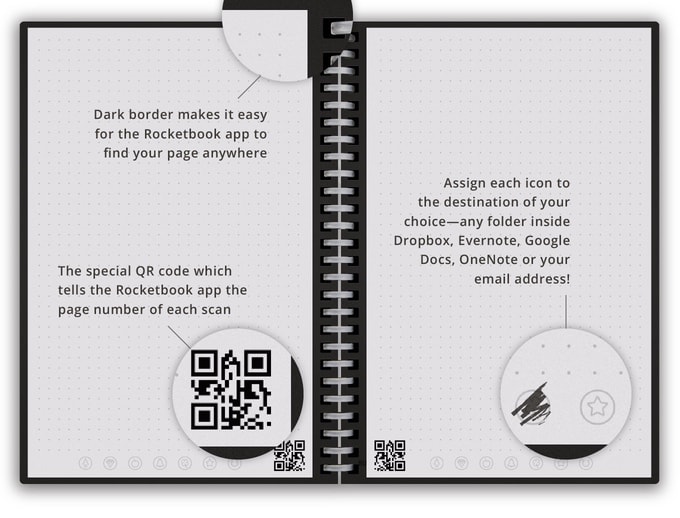
Rocketbook - It's going to seem magical, you are going to say "no way!" but Rocketbooks are a way to digitally store your handwriting and artwork in a reusable notebook. Buy the Rocketbook Wave and when it is full, clear it by putting it in the microwave with a cup of water. Wipe down the Rocketbook Color. The options are endless and the front of your refrigerator will be free of clutter as you keep your keepsakes online!  

Legos - Yes Legos! Nothing new here but the opportunities are endless! Do you have a future architect or a budding engineer, buy that kid some Legos and let the creativity abound. Do you have girls, buy her LOTS of Legos- we need more women in STEAM jobs. Google "Lego Challenges", print off the cards and stand back!

Sign Up for Coding Accounts - There are so many options to teach your child more about coding. What's coding? You might know it as computer programming. The nice thing about this option is that you can use the computer you already have at your house and just create accounts for your child- many options are absolutely free! Check out Scratch, the coding website written by two MIT students. Let them work in code.org and see what they enjoy. Invest in what peeks their interest. There future is computer science. Prep your child now for their future!

Virtual Reality Headset What is virtual reality? VR allows personalized virtual reality opportunities from games to field trips as if you are there in what feels like a total immersive experience. The opportunities are growing every day. Let your child dissect a frog or look at a 3D heart model using something like the Merge Cube below. You can use a phone with the lower cost VR headsets like as Google Cardboard but there are also stand alone VR Headsets like Occulus Rift.
 https://www.youtube.com/watch?v=i4Zt3JZejbg

Merge Cube - This is a virtual reality experience you can hold in your hand. It works with both android and iOS phones and gives you a very cost friendly virtual reality option. Play games or view 3D anatomy images. It is a soft spongey cube that won't break easily but gives insight into the future of learning. 

Kanu Computer Kit - Have a future IT person on your hands or an engineer? Let them put a computer together! Learn about the inner workings of a computer and create one by themselves. Is your child a tinker/builder? This is like Legos on steroids for that type of kid. Not only are they building but they are learning how computers work at the same time.

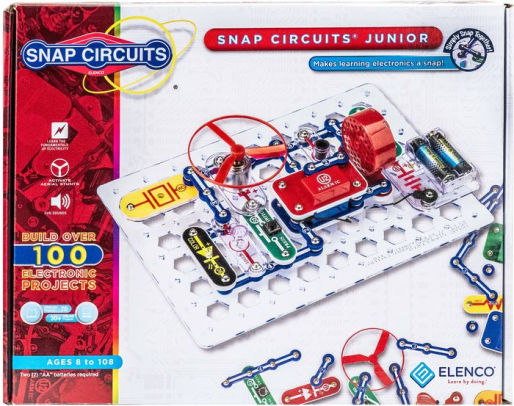
Snap Circuits Jr. - A wonderful cost effective way for children to learn about electricity and the basic properties of electronics. Snap Circuits Junior allows children to create while teaching them the concepts of circuits and how they are a part of things we use every day. 

Arduino Circuitry Kit - Take circuitry to the next level with older children and invest in Arduino kits. These kits include components they can manipulate to create models of all sorts of things. Your future electrical engineer will thank you for this gift!

As you consider the various gifts above, click on the names and it will take you to a link where they are available to be bought. I am not endorsing the companies I've linked to, just trying to give you an option to see costs and availability. What I love about each of these options is that it is more than just a toy. Some of them are training your child how to think logically, some of them will require a design thinking mindset, and some will just cause them to go "hmmm" and then question what they currently know and consider their futures.

As I have mentioned, some require the use of  computer or mobile device to make them work. Please hear me say that research shows that the best learning during computer gaming happens when parents participate with their children. Take 15-20 minutes out of your day a couple days a week and grow your students STEM skills for the future they are going to be living in. Learn with them! I certainly don't know how to do all the things listed here, and that is the beauty of these gift ideas...the possibilities are endless! 


Sunday, January 29, 2017

Family STEAM Night Cardboard Challenge


Recently, Chattanooga Christian Lower School hosted our second "Family STEAM Night." This evening was a cardboard arcade challenge that was inspired by Caine's Arcade Global Challenge . We started the evening off with all family members watching the video about Caine and his arcade and the movement that it created (see right). We then told the families they had 30-40 minutes to create an arcade game and that we would play each other's games for the rest of the time. The parents were given this document as the movie was playing.

The setup for this event was easy...cardboard, lots and lots of cardboard. We also had packing tape, glue, hot glue guns, scissors, ping pong balls, sponge balls, dowels, string, markers, streamers, balloons, pipe cleaners and anything else we had crafty that we thought might spur the imagination of others. And in a story I couldn't have scripted any better myself parents supported their students creativity, got out of their way when need be, listened to their innovations, and helped their children engineer arcade games. It was a thing of beauty!

As the evening progressed I noted three main things:

  1. After being at this school for 13 years I see a level of heightened creativity in our students across the board. Our students don't wait around, they dig in. I know this can't all be attributed to our new STEAM program but creativity and innovation is blossoming as CCS due to the culture of acceptance of trying new things that is also growing. I was amazed at the different games that appeared but not just that, the differences within the games themselves. For instance, there were 3 different skee ball games but each were uniquely different from each other. The design processes varied tremendously. That was exciting to me...to see each family interpret and create based on their own thoughts. 
  2. We are blessed by supportive administrators and teachers that see the value of STEAM at our school. We had all worked full days that day and I had said it was not mandatory for the teachers to participate but I stand amazed at those that have taken part in our STEAM Nights because they see it as a priority for our school.
  3. Children are creative by nature and when supported possibilities are endless. Very few parameters were placed on them for this event and they thrived. To have a multi-generational experience where the parents helped them critically think about the engineering dynamics was a beautiful thing to watch. To see parents help their children create a prototype of the images in their head was a lovely lesson of collaboration. To see parents follow the lead of their child to help them learn in the process shifted the parent/child paradigm in a unique way that evening that was a joy to experience. My favorite quote by a parent that evening that I overheard was "I'm not really sure what it is we are making yet but tell me where you want something glued and I can do that."
The video below is a simple compilation I created from the evening. It makes my heart happy to hear the students explain their creations. Enjoy and I encourage you to have your own cardboard challenge! Thank you to Conversant Group of Chattanooga, TN for sponsoring this night for our students. 


Wednesday, August 17, 2016

The STEAM dream with a dose of Instructional Technology


I'm at a place in the elementary school where I am seeing technology integrated more and more seamlessly every day. In the last few years it's gone from me sometimes pushing (sweetly) to get technology in the classrooms to ensure our students have exposure to technology as a learning tool to just seeing it happen where teachers find it aids their lessons. There are days I look back on and realize I was allowing technology to lead the curriculum instead of me focusing on pedagogy first- I'll blame it on being passionate about knowing it had worth. I think now it is fair to say we use technology as an instructional resource daily in the elementary school.

Over the years as we have progressed in the elementary school of incorporating technology in many different ways I have intentionally left off technology for technology sake. In this decision various gaming opportunities that have true educational benefit, coding opportunities, and robotics were put to the side as I focused on intentionally using technology for instructional purposes.

This year that has somewhat changed as we have received more funding through a generous donation from Conversant Group to grow our STEAM (science, technology, engineering, arts, mathematics) curriculum. We have begun to dream bigger. I am a firm believer in integration. I love when students can make connections to their world through the lessons they are learning in the classroom. This is happening and yet we are seeing tech for tech sake. We are now able to give our students more experiences in computer science in many ways. As I look around the classrooms I wonder which of the students might one day look back on these elementary experiences and realize that's when they knew they wanted to go into the world of computing.

I've worked so hard for us not to look like we were leading with technology that I find my self hesitant or nervous as we move forward in the direction we are going but in my heart of hearts I know this is a great step for our students. I continue to stand amazed at the way our STEAM endeavors have often seamlessly fit into our curriculum!

Tuesday, August 2, 2016

The frenzy of beginning


I always seem to be starting the new year wondering if I'm adding "the last straw" to overwhelmed teachers as they face the new school year with different expectations and a need to learn something quickly. I hold my breath as I plan how to share what this year will entail and I pray that I'm setting them up for success with the scaffolding and planning I've prepped. 

The hard part of starting new endeavors with teachers is that it usually means introducing the concepts the week before school starts when they are at their most frazzled! For the past two months I've been immersing myself in all things STEAM, PBL, and integrated units to best be the support I need to be as this new school year unfolds.

I am excited about these concepts and I hope my excitement is contagious as I extol to the teachers the benefits of PBL, the blessings of a STEAM grant, and the effectiveness of integrated units to wrap it all together. I stand amazed as I've seen the pieces come together in the last few days! 

As we plan and move forward to best meet the needs of the elementary students at CCS I am thankful for the team of educators I work with that come alongside, encourage, and challenge me to create a culture of learning that is exciting for all of us! It will definitely be a year of learning with our students... And I'm excited about that aspect. I think there is great value in students seeing that educators don't always have all the answers, aren't the smartest person in the room, and that they have things to learn about the topic at hand too. Perhaps that in itself will encourage some of our students to see the value of lifelong learning.