Showing posts with label coding. Show all posts

Sunday, June 16, 2019

Computational Thinker: Unpacking ISTE Student Standard #5


Help your students think like a robot? What is the value in that? Sequential, computational thinking allows students to understand the reasons computers do the things they do. Learning how to think computationally allows users to get the most of their tools. In a tech-rich environment, this looks like teaching students coding, or introducing them to spreadsheet functions to analyze data, or using 3D printers to create models for learning different components in order to answer a bigger problem.

But what does a non-tech classroom look like that teaches computational thinking? I mean, the word "computer" is in the goal?! Believe it or not, it can be done with something as inexpensive as paper, markers, and Solo cups. So let's discuss this unplugged party! One of the goals of computational thinking is to help students think about complex problems in smaller increments.

  • Start with explaining binary code by having students draw their name with each letter's code being represented with a different color. Or, create a necklace using straw pieces that spell out something using the binary code ASCII alphabet. This begins the process of understanding that computers talk to each other based on a certain "code."
  • You don't have to have computers or bots to teach coding. Put different colored dots or Solo cups on the ground and ask your students to get from point A to point B, C, etc by mapping it out. Working in pairs or small groups is great for this endeavor! But how does that relate to your high school English class or your Spanish 2 class? How often do you give your students an assignment and they jump important parts of the process, or miss key moments that foreshadow something that changes the whole direction of the book? When you are teaching directions and common words in a foreign language, what if the students actually mapped it up in the language and learned to code at the same time? 
Does teaching this standard seem like a stretch to you? I hear teachers say all the time, "I love the things I find on Pinterest and see teachers doing on Twitter but I can't figure out how to do the 'fun stuff' and still teach my curriculum too. How are they doing that?" The answer is CREATIVITY. I've seen kids code Dash and Dot robots to a certain location in the classroom, open up an envelope and find the next spelling word to add to their piece of paper. Turn the mundane into a mini-lesson. You don't have to have a robot to do that, use the unplugged version mentioned above!

Are you students studying something in your classroom that happened in Germany? Have students create a "code" with one block equalling X many miles to get from your classroom to the location. Then as a class, go to http://newspapermap.com/ and have students look at a newspaper during that time period in that area versus your area and then make deductions on the differences of the cultures through the lens of what you are currently discussing in class. Coding is a great way to start the process of setting the plot, setting, and theme.

So some of you have plowed through the above ideas and thought "Yeah, but why add that level of extra work to my lesson plans?" I get it, I struggled with that as well and then I saw the engagement that happened when a teacher didn't just say "Today we are going to read ______, it takes place in ________ in the 20th century." But do it not only for engagement but also because you see the value of those ISTE Standards for Students as a way of making sure your students are prepared for the road ahead of them. Even if your classroom doesn't have ready access to technology or you don't know the first thing about coding a computer.

In 1999 the U.S.Department of Labor said 65% of today's grade-school children will end up in jobs that have not been invented yet. (https://www.dol.gov/dol/aboutdol/history/herman/reports/futurework/report/chapter1/main.htm) Folks, that was 20 years ago! We have to help students think computationally. It isn't about an iPad, Chromebook, laptop, or wearable technology. As Tom Murray said at FETC 2017, "The technology our students are using today is the worst technology they will ever use." We have to prepare them for that unknown to the best of our abilities. We are living in a world of accelerated change!

I personally am greatly intrigued by the idea of enhancing the classroom setting by using voice speakers such as Echo Dots and Google Assistants. I find myself longing for the knowledge of how to code for these devices to better equip classrooms with personalized Alexa Skills and Google Actions. In a very real way, I am seeing how focusing on ISTE Student Standard #5 would have benefited me as a student for my future.
No Tech Low Tech High Tech

Sunday, March 18, 2018

Year Two - Elementary Tech Team Plan

Our elementary school creates an opportunity for our fourth and fifth-grade students to take part in Friday afternoon electives where they choose from about 7- 8 choices that teachers lead from their passions. The opportunities have been awesome- woodworking, knitting, makerspace, board games, digital gaming, are just a few. For me, it finally gave me the opportunity to create an elementary tech support team.  Last year our students researched and created step-by-step instructional supports for our teachers regarding the technology they use on a regular basis. The opportunity was awesome and the details of what we did and accomplished can be found here in this post: https://techhelpful.blogspot.com/2016/11/the-beauty-of-ownership-and-belonging.html

This year we are going a different direction. The students will once again create "how to" instructional supports that might be a Google doc or a video but we are making it a bit more fun. Recently, I asked our elementary teachers what they needed the most in terms of technology professional development. The answer was, "we want to have a better understanding of our STEAM tools."

Two weeks ago I had the opportunity to attend a workshop sponsored by Mozilla that allowed the attendees to create an escape room experience that would allow the users to learn more about iOT (internet of things) as they went through the experience. I loved the idea! So I challenged my 7 students in this quarter's tech team to think on this. We will have 10 weeks of 45 minutes on Friday to create our experience. Here is what we defined and how we are going to accomplish it:

Day 1:

  • I gave the students 3 sticky notes each and had students write down 3 STEAM tools they felt they could teach their teachers more about. We then sorted these ideas and came up with a list to work from. 
  • We then used the sticky note idea to write down 3 themes for our rooms. Each student wrote down their ideas and we sorted those. Based on which idea had the most votes, we went with an "ocean" theme.
  • Our next step was to assign groups and have each student start thinking about what their experience will look like with the STEAM tool they were assigned. For instance, they want to dress their Dash and Dot robots up like "pirmaids" (pirate mermaids) and have them go on a treasure hunt. 
Day 2: 

Our new STEAM Project Assistant and Curriculum coordinator will meet with our students and they will teach her skills because she is new to the job. Based on the questions she asks and the things they think she should know, they will start creating a list of basic skills needed for their tool. I'm actually out of town for this week so I created this video to help the students know what they would do for this week: 


Day 3:
Students will start creating their lesson plan for their escape room experience based on their ideas from day 1 and their notes from Day 2.

Day 4: Students will create green screen video productions of "how to" use the tech tools. These videos will be viewed by the teachers before they start their escape room experience for each tool. 

Day 5: We will upload all videos to last year's tech team website so that there is one place teachers can go for support. 

Day 6: We will continue to create a good escape room experience. Our goal is to offer it for each grade level to work together. 

Day 7: Students will create the experience and try each other's stations out and give feedback.

Day 8: Students will take the feedback from the previous week and finish up their end product.

Day 9: Students will use the time to decorate the room and offer the 30-minute professional development opportunity to any available teachers, admin, and parents.

Day 10: Students will once again use the time to decorate the room and offer the 30-minute professional development opportunity to any available teachers, admin, and parents.


Full STEAM Ahead at CCS


In the spring of 2016 our school was approached by a parent that wanted more STEAM opportunities for his daughters to take place at our school. Oftentimes people think that funding comes easy for private schools but I submit that it does not for individualized curricular projects. The grants aren't available to us and that was where I was as the Technology Coordinator in our lower school. Until this parent shared not only his vision but created funding opportunities, I just dreamed about integrating coding, robotics, circuitry, etc into our curriculum- the funding just wasn't there.

The change happened with the 2016-2017 school year and we were able to create a STEAM (Science, Technology, Engineering, Arts, Math) curriculum into our school that supported our integrated units. We were also able to hire a full time STEAM Project Assistant that would learn the nitty gritty of coding, robotics, circuitry, and the design thinking process. This STEAM Project Assistant meets with grade level teachers and works with them to create opportunities for integrated projected based learning as well as stand alone STEAM lesson plans that support weekly learning. The beauty of the way we have done this is that this STEAM Project Assistant creates embedded professional development opportunities for our teachers as well. They are able to learn about coding hand-in-hand with their students. Our goal with our STEAM program is to give our students a variety of experiences to broaden their understanding of potential STEAM jobs for their futures. We have adopted the concept of these lesson plans to not be associated with a "grade." This is our attempt to create a culture that makes students lead with curiosity and not fear failing. Our project based learning opportunities are graded by the teachers but any weekly STEAM lessons that do not impact the PBLs are considered scaffolding for learning.

This change opened the door for our students to have a variety of new experiences and for some of our students there was an immediate "click." We were already a tech-rich lower school with rolling carts of iPads and chrome books in grades preK-4th and a 1:1 environment for our fifth graders but the STEAM program created more opportunities to use the technology beyond the 4 C's of technology integration- curation, consumption, creation, and connection in ways we had not had the ability to do before.
We are programming robots and concepts, making green screen productions and showing our elementary students how to make websites. We were taking our possibilities to a new level like never before. For some of our students, we peaked an interest...we were empowering the "brains."

Wednesday, March 7, 2018

Connecting Computer Science to Today's World


In the globally connected world that we are currently in and the ease at which people from all over the world can be hired in a brief moment to do jobs that in the past could not be outsourced easily, it's time to rethink computer science in our schools.

Recently I had the opportunity to talk with a STEM district leader and heard concerns about teaching both more and higher level computer science classes in their district. I think it is fair to say that many school systems are looking deeply at the scope and sequence of computer science for our students.

In the state of Tennessee, Computer Science falls under the category of CTE (Career and Technical Training)- this was what was known as vocational education a few years back.  As a former business education certified teacher, I would be considered qualified to teach Computer Science classes because our state does not currently have a computer science endorsement (and I can tell you I do not have the skill set for what that means today). In my opinion, this is a travesty to today's students and the future workforce of our state and country.  In a world where we are tracking students into college ready or CTE we have segmented both the availability of these classes away from students that might truly be interested in this as a college career. STEM jobs are the fastest growing need in our country today but so many states need to step up to create more fluid opportunities for this to happen.

Some school systems have adopted a curriculum called "Project Lead the Way" that embeds coding skills into the science curriculum. This is an attempt to give students both the experience of coding and to create pathways for interested college-bound students to move in that direction. While I believe in embedded and integrated technology, I am somewhat concerned that this process isn't truly creating the path that is rigorous enough for the future.

At Chattanooga Christian School we happen to have a faculty member, Cathy Smith, with a robust programming background. But the truth of the matter is, most schools aren't this fortunate and therefore they can't afford to hire the level of knowledge base needed on a school budget. When speaking to my STEM friend I could see how she was trying to bridge the issues that she sees in computer science and our state. You see, someone with high level computer science skills can walk into IT opportunities all over the country that would allow them to double or triple what they can make in any school system. How do we tap into this? Adjunct faculty? CCS is blessed by Cathy Smith. We are one of only a handful of school's that even offers any AP Computer Science classes. According to code.org, "Tennessee had only 625 computer science graduates in 2015; only 18% were female. Only 934 exams were taken in AP Computer Science by high school students in Tennessee in 2017." Folks, nationally only 10 percent of schools teach AP Computer Science classes. I'm thankful we are one of them...but these statistics have to change. 

I am thankful to work in a school system that has a remarkable faculty that understands the math scaffolding needed to develop an understanding of programming. This is an area that causes struggles for many school systems in that the required logic, math, and scientific scaffolding isn't happening for most of the students that are on a CTE track and the lack of wiggle room in elective choices creates some disconnect for college bound students being able to choose this CTE track option.

It's time for state education systems to re-evaluate Computer Science in the realms of availability, quality instructors, and how it integrates into the educational climate as a whole. Just because a student has "done HTML" or "coded in Scratch" does not mean that they have a skill set that will help them critically create something of worth in the future.  It's time for us all to get intentional about computer science and it's scope and sequence starting in pre-K. I am a firm believer that even the youngest child has the ability to start thinking in the sequential manner needed to be future coders. Edtech companies are on board trying to create stepping stone opportunities for this to happen through such things as drag and drop block coding, and kid friendly robotics like Wonder Workshop's Dash and Dot. These resources are what make intentional computer science options available for students and there are ways to embed these skills into our daily curriculum. We are doing just that in our elementary school, in an introductory level.

Research shows that by age 12 most students have a mindset for or against all things STEM and what they want to do with their future. It is imperative that we start creating those experiences and opportunities in intentional ways for our future workforce.

Tuesday, November 14, 2017

Christmas Tech Toy List


 It is the time of year where children are targeted by every toy commercial that comes on. Children start adding toy after toy to their list only because they are being bombarded with messages against your will. But fear not, there are so many choices that parents and grandparents can make that are considered a TOY as well as EDUCATIONAL. Below is a list of potential gifts from my realm of education - STEAM (science, technology, engineering, arts, and math). Toys can be fun and educational at the same time. 

Ozobots - Yes! Teach your child how to code a robot. Ozobots are a cost effective way to introduce coding to the physical world. While you don't have to have a device with BIT to make them work having an android or iOS device to download the app takes your opportunities with EVO to the next level. Check out Ozobots for children of any age! 


Dash and Dot - Wonder Workshop makes robotics durable and cost effective for even the youngest child. You will need a device to code with these cute little robots but the 3 app choices gives you opportunities for all age groups to have a little fun with robotics.  

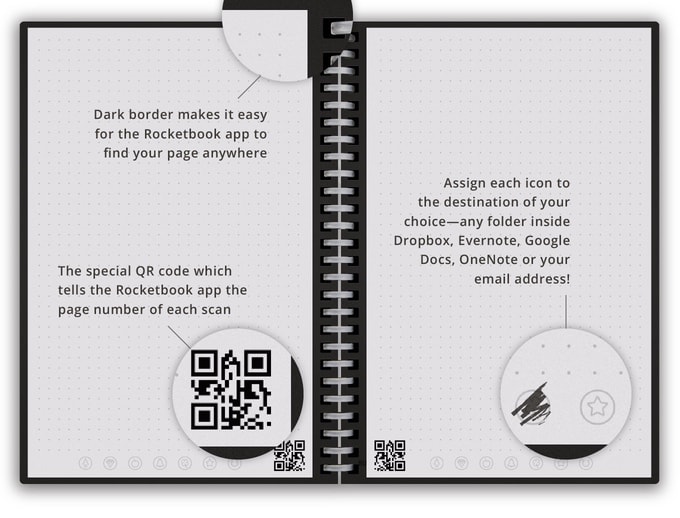
Rocketbook - It's going to seem magical, you are going to say "no way!" but Rocketbooks are a way to digitally store your handwriting and artwork in a reusable notebook. Buy the Rocketbook Wave and when it is full, clear it by putting it in the microwave with a cup of water. Wipe down the Rocketbook Color. The options are endless and the front of your refrigerator will be free of clutter as you keep your keepsakes online!  

Legos - Yes Legos! Nothing new here but the opportunities are endless! Do you have a future architect or a budding engineer, buy that kid some Legos and let the creativity abound. Do you have girls, buy her LOTS of Legos- we need more women in STEAM jobs. Google "Lego Challenges", print off the cards and stand back!

Sign Up for Coding Accounts - There are so many options to teach your child more about coding. What's coding? You might know it as computer programming. The nice thing about this option is that you can use the computer you already have at your house and just create accounts for your child- many options are absolutely free! Check out Scratch, the coding website written by two MIT students. Let them work in code.org and see what they enjoy. Invest in what peeks their interest. There future is computer science. Prep your child now for their future!

Virtual Reality Headset What is virtual reality? VR allows personalized virtual reality opportunities from games to field trips as if you are there in what feels like a total immersive experience. The opportunities are growing every day. Let your child dissect a frog or look at a 3D heart model using something like the Merge Cube below. You can use a phone with the lower cost VR headsets like as Google Cardboard but there are also stand alone VR Headsets like Occulus Rift.
 https://www.youtube.com/watch?v=i4Zt3JZejbg

Merge Cube - This is a virtual reality experience you can hold in your hand. It works with both android and iOS phones and gives you a very cost friendly virtual reality option. Play games or view 3D anatomy images. It is a soft spongey cube that won't break easily but gives insight into the future of learning. 

Kanu Computer Kit - Have a future IT person on your hands or an engineer? Let them put a computer together! Learn about the inner workings of a computer and create one by themselves. Is your child a tinker/builder? This is like Legos on steroids for that type of kid. Not only are they building but they are learning how computers work at the same time.

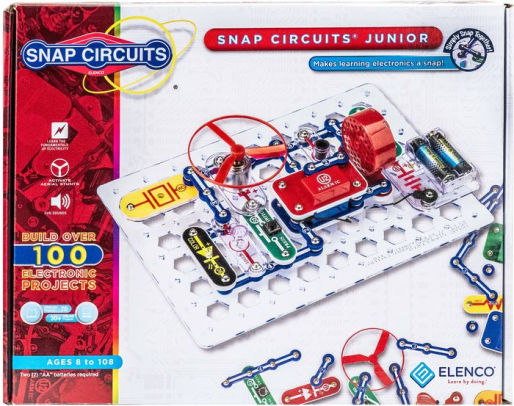
Snap Circuits Jr. - A wonderful cost effective way for children to learn about electricity and the basic properties of electronics. Snap Circuits Junior allows children to create while teaching them the concepts of circuits and how they are a part of things we use every day. 

Arduino Circuitry Kit - Take circuitry to the next level with older children and invest in Arduino kits. These kits include components they can manipulate to create models of all sorts of things. Your future electrical engineer will thank you for this gift!

As you consider the various gifts above, click on the names and it will take you to a link where they are available to be bought. I am not endorsing the companies I've linked to, just trying to give you an option to see costs and availability. What I love about each of these options is that it is more than just a toy. Some of them are training your child how to think logically, some of them will require a design thinking mindset, and some will just cause them to go "hmmm" and then question what they currently know and consider their futures.

As I have mentioned, some require the use of  computer or mobile device to make them work. Please hear me say that research shows that the best learning during computer gaming happens when parents participate with their children. Take 15-20 minutes out of your day a couple days a week and grow your students STEM skills for the future they are going to be living in. Learn with them! I certainly don't know how to do all the things listed here, and that is the beauty of these gift ideas...the possibilities are endless! 


Tuesday, May 2, 2017

Finishing Strong by Taking Chances?

I'll be honest, when I was asked to blog on the topic "Testing is over...What now?" I jumped on the chance to be a part of this series because it's a group of amazing educators and I love to blog. Unlike the rest of them, testing seems to have less impact on my private school than at their public schools. There is no tie to funding and there is less stress on our teachers based on test results. While we do not do the state testing, we do have students take the NWEA test. I've sat in an office where an administrator has looked at test results by standard and realized "our students haven't gotten to that yet." There is an understanding in our school that we are going to teach to the end of the year. Managing that is probably a little bit easier to do with a preK-12 school of 1200 than some of these larger districts my friends are in.

Regardless, there still seems like there is burnout in the air and a sense of finality approaching. So what are things we can do to use this time to finish strong? You'll often hear me talking about risk taking and creating a culture where it is safe to fail for both students and teachers. The important thing is you fail forward. In other words, when you try something but it doesn't work you don't say "oh well, that was a disaster!" but "that didn't work, what can I do to value the concept forward and learn from what went wrong and make it better?" That's failing forward. What a great time to take those chances! I challenge you to look for something to try that might make these last days less monotonous. The nice thing is you have some great guinea pigs ready for you, you've trained them all year long! 

I want to share five things you might try in your classroom in these last weeks to take a chance on creating something valuable for the future (yours, your current students, and even your future students):
  1. Genius Hour or 20% Time...This is a creation of the Google Company themselves. They allow their employees 20% of their work week to learn about things that they are passionate about. What if you allowed your students some of this type of time with your watch care and guidance? It doesn't have to be chaos. Have students create Project Plans and collaborate to make them better. Then have students create project logs after every time they work on the project. Also, if you want it to be more structured, have it support a certain unit you have studied. Flexibility within boundaries but allowing students voice and choice.
  2.  Google Classroom...If you are a district that has been using the Google Suite apps in the classroom  for a while you are probably already leveraging Docs, Slides, Drive, Forms, and Sheets. Now is a good time to try Google Classrooms to see it's efficiencies! My friend Matt Miller from #ditchthattextbook created this blog post that is helpful in both understanding what it will and will not do, as well as giving you some ideas on how to implement it. You aren't a Google school? What LMS does your district/school/coworker use? Create a lesson using that to try it out. 
  3. Coding...I'm a firm believer that coding can support any curriculum due to the fact that it naturally teaches sequencing, coding gives access to technology, gives students a life skill, and coding teaches thinking. This blog by Vicki Davis gives you some great ideas for creating coding opportunities in your classroom no matter what you teach and what grade level you teach it in. Don't have access to technology? Make sure you look at the unplugged options at code.org.
  4. VLOG...Not all students are good writers but all students have things to share. A VLOG is the video equivalent of a BLOG (weB LOG). Allow your students to VLOG about some topic - you choose it or let them. Start somewhere simple like by using Seesaw Learning Journal. If you aren't already using it, it allows you to give your student a new platform as well. The free version will meet your needs just fine! (Make sure you follow Christopher King's VLOG on day three of this series (tomorrow) to see what a VLOG can do!
  5. Edcamp Style Learning...I am a huge fan of the unconference model of professional development that the Edcamp model brought to education. This will be year four of my involvement with Edcamp Gigcity in Chattanooga, Tennessee. But what if we gave students sticky notes and asked them what they would like to learn about? What if we created stations in our classroom that would allow them to learn from each other about those topics? It might not could be as wide open depending on the age you teach but I do believe it could be structured edcamp even for the youngest of students. 
These are just a few ideas that I think teachers could toy with here at year end. These do not take a lot of prep time or learning time on your part but have the potential for adding either depth or efficiencies for your classroom's future. And lets be honest, there are so many reruns of Lion King we want to sit through. Take these ideas or create your own but FINISH STRONG! Want to learn more on this topic? Make sure you look over yesterday's post by Mick Shuran that can be found at http://mickshuran.com and as I mentioned earlier, tomorrow's VLOG by Christopher King can be found at http://firesidechats.blog/


Monday: Mick Shuran http://mickshuran.com


Wednesday, August 17, 2016

The STEAM dream with a dose of Instructional Technology


I'm at a place in the elementary school where I am seeing technology integrated more and more seamlessly every day. In the last few years it's gone from me sometimes pushing (sweetly) to get technology in the classrooms to ensure our students have exposure to technology as a learning tool to just seeing it happen where teachers find it aids their lessons. There are days I look back on and realize I was allowing technology to lead the curriculum instead of me focusing on pedagogy first- I'll blame it on being passionate about knowing it had worth. I think now it is fair to say we use technology as an instructional resource daily in the elementary school.

Over the years as we have progressed in the elementary school of incorporating technology in many different ways I have intentionally left off technology for technology sake. In this decision various gaming opportunities that have true educational benefit, coding opportunities, and robotics were put to the side as I focused on intentionally using technology for instructional purposes.

This year that has somewhat changed as we have received more funding through a generous donation from Conversant Group to grow our STEAM (science, technology, engineering, arts, mathematics) curriculum. We have begun to dream bigger. I am a firm believer in integration. I love when students can make connections to their world through the lessons they are learning in the classroom. This is happening and yet we are seeing tech for tech sake. We are now able to give our students more experiences in computer science in many ways. As I look around the classrooms I wonder which of the students might one day look back on these elementary experiences and realize that's when they knew they wanted to go into the world of computing.

I've worked so hard for us not to look like we were leading with technology that I find my self hesitant or nervous as we move forward in the direction we are going but in my heart of hearts I know this is a great step for our students. I continue to stand amazed at the way our STEAM endeavors have often seamlessly fit into our curriculum!

Thursday, February 18, 2016

Elementary iPad Enrichment Activities


Here are some iOS app options for use for when students master quickly/finish early.  These are activities that are self-correcting or easy to understand creative options.


duolingo.png

This app allows students to work on a foreign language. Mrs. Hoffman says it would be good for Spanish in grades 2-5.


StoryKit.png

This app allows students to create a “book.” I would be happy to explain it to your students at any time.


spelling city.png

This app is a great grouping of language games by grade level for grades k-5. Students will need headphones to use.


tap typing.png

This app is a great way for students to practice keyboarding on an iPad to become familiar with where letters are. All grades.


hopscotch.png

This is a coding app for grades 3-5. Great way for kids to critically think while learning how to program.


lightbot.png

This is a coding app for grades 3-5. Puzzler type app that teaches coding


scratch jr.png

This is a coding app geared towards the younger grades. Allow your students to create their own games or stories.


book creator.png
All students to create books grades 2-5. Watch the tutorial to learn how best to use this app.